Steven Taylor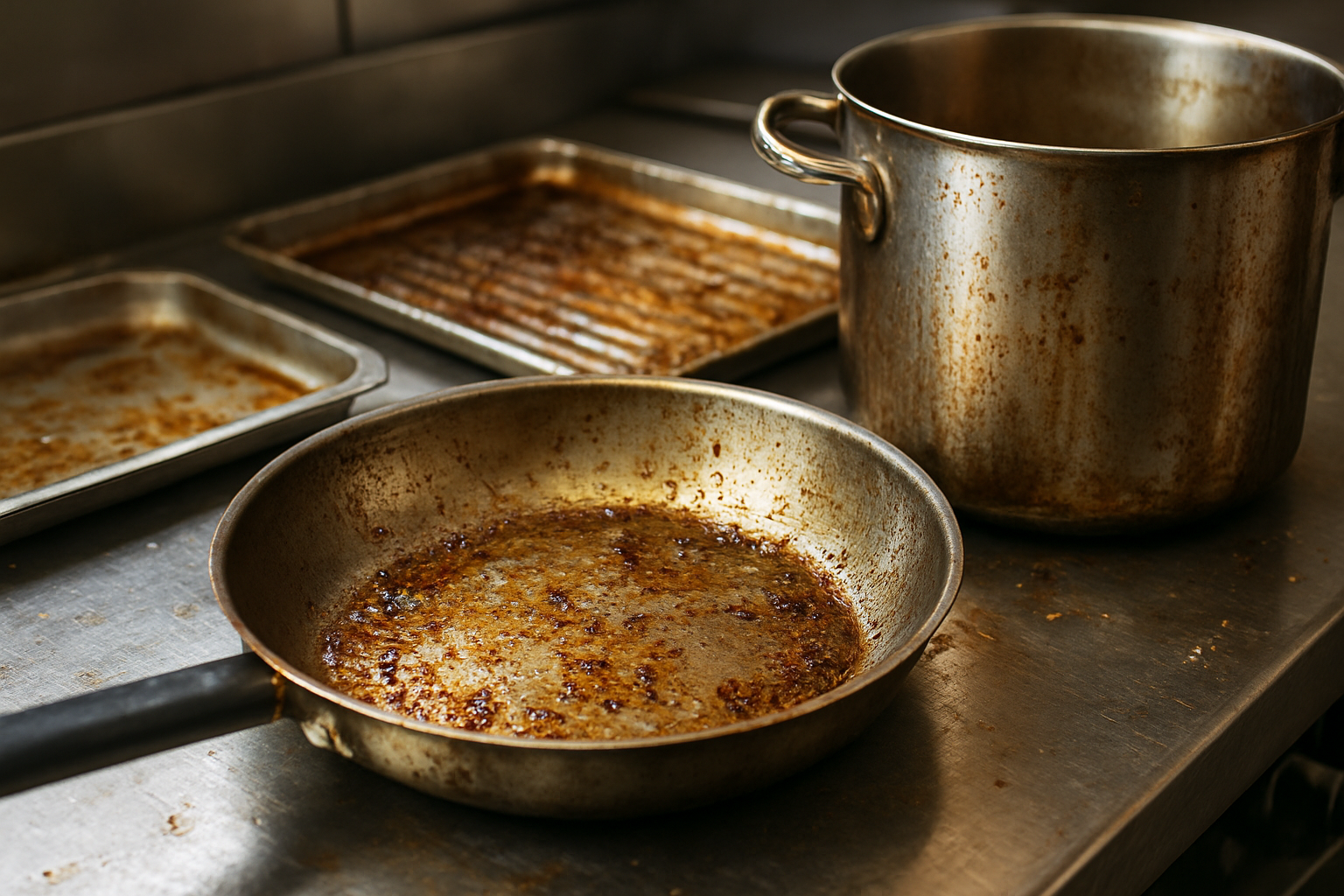
Running a commercial kitchen in Florida is demanding work. Service windows are tight, staff turnover is high, and the pressure to keep production moving often pushes maintenance tasks to the bottom of the priority list. Deep cleaning, in particular, tends to get postponed far more often than it should. What many operators don’t fully appreciate is how quickly deferred cleaning creates compounding problems—ones that are far more disruptive and costly to resolve than the cleaning itself.
In This Article
- Why Does Grease Buildup Happen So Quickly in Florida Commercial Kitchens?
- What Happens to Equipment When Deep Cleaning Is Neglected?
- How Does a Dirty Kitchen Affect Staff Performance and Retention?
- What Role Does Deep Cleaning Play During Florida Health Inspections?
- How Can Florida Operators Build a Deep Cleaning Schedule That Works?
- What Makes Florida Commercial Kitchens Unique When It Comes to Deep Cleaning?
Florida presents a uniquely challenging environment for kitchen operators. The state’s heat and humidity don’t stop at the back door. Inside a commercial kitchen, those conditions combine with cooking vapors, grease output, and constant moisture from dishwashing and food preparation to create an environment where buildup happens fast. Scheduling consistent commercial kitchen deep cleaning Florida service providers offer is not a luxury for high-performing kitchens—it’s an operational necessity.
Why Does Grease Buildup Happen So Quickly in Florida Commercial Kitchens?
Grease is an unavoidable byproduct of commercial cooking. Every time proteins hit a hot surface, every time oil is used in a fryer, every time a grill runs at full capacity, grease particles become airborne and settle across every surface within range—including hood systems, ductwork, walls, and equipment surfaces. In a standard climate, this process happens steadily. In Florida’s heat and humidity, it accelerates.
Warm, humid air keeps grease in a semi-liquid state longer, which means it spreads further and penetrates more deeply into porous surfaces before hardening. Once grease oxidizes and hardens on surfaces like exhaust ducts, filters, and the interior of cooking equipment, it becomes significantly more difficult to remove. The longer it sits, the more labor-intensive and time-consuming the removal process becomes. For kitchens that skip or delay deep cleaning cycles, this translates directly into higher costs when a professional service is eventually brought in.
Beyond the cleaning challenge, accumulated grease carries serious fire risk. Cooking fires are a leading cause of commercial property loss in the restaurant industry, and a substantial portion of those fires originate in grease-laden ventilation systems. Florida fire codes require that hood and exhaust systems be cleaned at intervals determined by the volume and type of cooking—requirements that exist because the consequences of non-compliance can be catastrophic.
What Happens to Equipment When Deep Cleaning Is Neglected?
Commercial kitchen equipment represents a substantial long-term investment. Ovens, fryers, grills, refrigeration units, and ventilation systems are all designed to operate within specific parameters. When grease, mineral deposits, and food residue accumulate on and within these systems, their efficiency drops and their operational lifespan shortens.
Fryers that are not thoroughly cleaned develop residue buildup that affects oil quality and heat transfer. This results in food quality inconsistencies and accelerated oil degradation, which increases operating costs over time. Ovens with dirty interiors and compromised door seals require more energy to maintain target temperatures. Refrigeration units with dirty condenser coils work harder to maintain proper temperatures, increasing energy consumption and shortening the lifespan of the compressor.
Ventilation systems are particularly vulnerable. When exhaust ducts are coated with grease, airflow is restricted. This creates a less comfortable working environment, increases fire risk, and forces the system’s motor to work harder than it was designed to. Professional deep cleaning restores these systems to proper working condition, protecting the equipment and the investment it represents.
How Does a Dirty Kitchen Affect Staff Performance and Retention?
The condition of a kitchen has a direct impact on the people who work in it. A clean, well-maintained kitchen signals to staff that management cares about their working conditions. A dirty, neglected kitchen sends the opposite message—and in Florida’s competitive hospitality labor market, that perception matters.
Slip-and-fall incidents are a significant source of workplace injuries in commercial kitchens, and grease on floors is a primary contributing factor. A kitchen that undergoes regular deep cleaning maintains safer floor surfaces, particularly in high-traffic zones around cooking stations and dishwashing areas. Fewer slip hazards mean fewer injuries, fewer workers’ compensation claims, and lower insurance costs over time.
Air quality is another factor. Poorly maintained ventilation systems allow grease vapors, smoke, and cooking byproducts to linger in the kitchen environment. Staff working in these conditions experience greater fatigue, increased respiratory irritation, and lower overall comfort. Improving ventilation through proper cleaning directly improves the air quality in the kitchen—a tangible benefit that experienced kitchen workers notice and appreciate.
What Role Does Deep Cleaning Play During Florida Health Inspections?
Florida’s Division of Hotels and Restaurants conducts unannounced inspections of licensed food service establishments. These inspections evaluate a wide range of conditions, from food storage temperatures to the cleanliness of equipment, the condition of floors and walls, the functionality of drainage systems, and the overall sanitation of preparation areas.
Inspectors are trained to look beyond visible surfaces. They check inside equipment, under prep tables, within hood systems, and behind cooking lines—exactly the areas that standard daily cleaning routinely misses. Kitchens that rely solely on in-house cleaning often accumulate violations in these areas, not because the staff is negligent, but because deep cleaning requires specialized equipment and training that most kitchen teams don’t have access to.
Professional deep cleaning services prepare kitchens for this level of scrutiny. Providers familiar with Florida’s food service regulations understand what inspectors prioritize and structure their services to address those areas directly. Documentation of completed deep cleaning services can also serve as supporting evidence during inspections, demonstrating that the operator maintains a proactive approach to sanitation.
How Can Florida Operators Build a Deep Cleaning Schedule That Works?
The most effective deep cleaning strategy is one that is consistent, documented, and tailored to the specific demands of the kitchen. No two kitchens are identical—a high-volume seafood restaurant generates different cleaning demands than a catering operation or a hotel banquet kitchen. Building a schedule that reflects the actual operating conditions of the kitchen produces better results than following a generic template.
Working with a cleaning provider to conduct an initial assessment of the kitchen is a strong starting point. A thorough walk-through allows the provider to identify high-priority areas, estimate cleaning time, and recommend appropriate service intervals. From there, operators can build a calendar that integrates deep cleaning into their operational schedule in a way that minimizes disruption—typically scheduling services during off-hours or on slower operational days.
Documentation matters as well. Keeping a record of every deep cleaning service, including the date, scope of work completed, and the products used, creates a paper trail that supports regulatory compliance and helps operators track the condition of their kitchen over time. Some providers offer digital reporting as part of their service package, making record-keeping straightforward.
What Makes Florida Commercial Kitchens Unique When It Comes to Deep Cleaning?
Florida’s food service industry spans an enormous range of establishment types—from quick-service beachfront operations to full-service hotel kitchens, event venues, hospital cafeterias, and institutional food service operations. Each of these environments has its own cleaning challenges, but all of them share the foundational reality of Florida’s climate.
The heat, humidity, and extended peak seasons that define Florida’s hospitality market create conditions where regular maintenance simply cannot keep pace with the rate of buildup. Deep cleaning is not a corrective measure—it’s a proactive one. The kitchens that understand this distinction tend to operate more smoothly, pass inspections more consistently, and avoid the kind of emergency situations that force unplanned closures.
Partnering with a cleaning provider that understands Florida’s specific regulatory environment, climate conditions, and the operational demands of busy commercial kitchens is the most reliable path forward. The investment in professional deep cleaning consistently pays for itself through reduced equipment repair costs, better inspection outcomes, lower fire risk, and a kitchen environment that supports the quality of service every Florida food establishment depends on.
Key Takeaways
- Deep cleaning in Florida commercial kitchens is crucial due to the state’s heat and humidity, which accelerates grease buildup and makes maintenance more challenging.
- Accrued grease presents a serious fire risk in commercial kitchens, with many cooking fires originating from grease-laden ventilation systems, highlighting the importance of adherence to Florida fire codes.
- Neglecting deep cleaning can lead to decreased efficiency and lifespan of kitchen equipment, resulting in higher operational costs and inconsistent food quality.
- A clean kitchen enhances staff performance and retention by signaling management’s care for working conditions, while a dirty kitchen can contribute to slips, injuries, and poor air quality.
- Florida health inspections evaluate cleanliness beyond what daily cleaning can manage, often revealing violations in areas that require specialized deep cleaning expertise.
- Regular deep cleaning helps maintain safe floor surfaces and improves air quality, reducing workplace injuries and enhancing staff comfort in commercial kitchens.